✨ Made with Daftpage
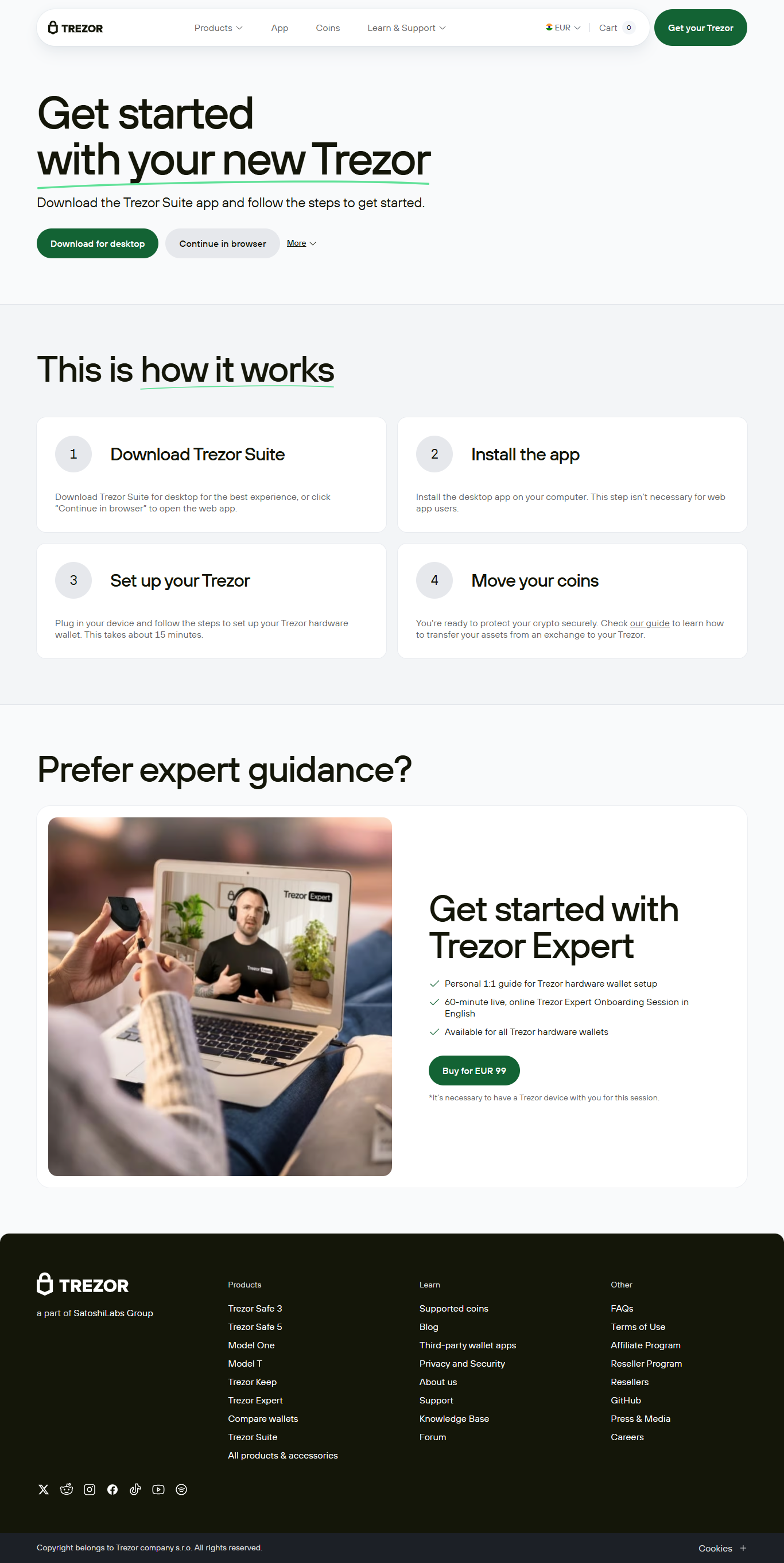
Trezor Login
Your Complete, Secure, and Beginner-Friendly Guide to Accessing Your Trezor Hardware Wallet
What Does “Trezor Login” Actually Mean?
The phrase Trezor Login is commonly misunderstood. New crypto users often assume that logging in involves entering a username and password on a website — much like signing into an exchange, bank, or email account. But Trezor works differently. Very differently.
Trezor uses a hardware-based authentication method, meaning your physical device is your login key. Instead of typing sensitive details online, you connect your Trezor wallet to Trezor Suite, verify your PIN on the device itself, and authenticate your identity using offline cryptography.
This approach aligns perfectly with the core principles of decentralized finance (DeFi), blockchain sovereignty, and true self-custody. It ensures that your private keys never leave your device and remain protected from online threats at all times.
This guide walks you through everything: how Trezor login works, how to secure it, how to avoid scams, and how to confidently manage your digital assets in 2025.
Trezor uses a hardware-based authentication method, meaning your physical device is your login key. Instead of typing sensitive details online, you connect your Trezor wallet to Trezor Suite, verify your PIN on the device itself, and authenticate your identity using offline cryptography.
This approach aligns perfectly with the core principles of decentralized finance (DeFi), blockchain sovereignty, and true self-custody. It ensures that your private keys never leave your device and remain protected from online threats at all times.
This guide walks you through everything: how Trezor login works, how to secure it, how to avoid scams, and how to confidently manage your digital assets in 2025.
Key Things to Know Before Logging Into Trezor
✔ No passwords, accounts, or emails
✔ Authentication happens only inside Trezor Suite
✔ Your PIN and passphrase secure your wallet
✔ Your recovery seed must never be typed on a computer
✔ No website offers a legitimate “Trezor login page”
✔ Authentication happens only inside Trezor Suite
✔ Your PIN and passphrase secure your wallet
✔ Your recovery seed must never be typed on a computer
✔ No website offers a legitimate “Trezor login page”
How the Trezor Login Process Works (Step-by-Step)
Logging into Trezor is designed to be both simple and extremely secure. Here’s how the process flows:
1. Launch Trezor Suite – This is the official interface for managing crypto, viewing your portfolio, swapping assets, and adjusting device settings.
2. Connect your Trezor device – Trezor Suite immediately checks for authenticity and initiates encryption between the device and your computer.
3. Enter your PIN – The device displays a scrambled keypad layout, and you click the matching positions in Trezor Suite. This randomized grid keeps your PIN hidden from keyloggers.
4. (Optional) Enter your passphrase – Users can enable an extra secret layer that creates a hidden wallet accessible only through a custom phrase.
5. Access your wallet – You can now send/receive crypto, generate addresses, manage accounts, or use supported decentralized applications (via connected platforms).
With no online account to hack and no passwords stored on servers, this system is one of the safest authentication methods in Web3.
1. Launch Trezor Suite – This is the official interface for managing crypto, viewing your portfolio, swapping assets, and adjusting device settings.
2. Connect your Trezor device – Trezor Suite immediately checks for authenticity and initiates encryption between the device and your computer.
3. Enter your PIN – The device displays a scrambled keypad layout, and you click the matching positions in Trezor Suite. This randomized grid keeps your PIN hidden from keyloggers.
4. (Optional) Enter your passphrase – Users can enable an extra secret layer that creates a hidden wallet accessible only through a custom phrase.
5. Access your wallet – You can now send/receive crypto, generate addresses, manage accounts, or use supported decentralized applications (via connected platforms).
With no online account to hack and no passwords stored on servers, this system is one of the safest authentication methods in Web3.
Why Trezor Login Is More Secure Than Traditional Logins
Traditional authentication relies on centralized servers storing user credentials — passwords, email addresses, recovery options, 2FA tokens. These systems are vulnerable to data breaches, phishing attacks, SIM swaps, and compromised servers.
Trezor uses offline cryptography instead.
Your private keys remain:
• Offline
• Encrypted
• Stored inside your hardware device
This eliminates risks associated with cryptocurrency exchanges and centralized wallets. Not even Trezor can see or reset your PIN, passphrase, or seed — only you maintain full control.
Trezor uses offline cryptography instead.
Your private keys remain:
• Offline
• Encrypted
• Stored inside your hardware device
This eliminates risks associated with cryptocurrency exchanges and centralized wallets. Not even Trezor can see or reset your PIN, passphrase, or seed — only you maintain full control.
Trezor Login vs. Typical Online Crypto Login
| Feature | Trezor Login | Online Login |
|---|---|---|
| Private Key Storage | Offline (hardware) | Online (servers) |
| Login Method | Device + PIN + Passphrase | Email + Password |
| Phishing Risk | Extremely Low | High |
| Server Dependency | None | High |
Understanding the PIN: Your First Line of Defense
Each time you connect your Trezor device, you must enter your PIN using a shuffled matrix displayed on the hardware screen. This protects you from:
• Keyloggers
• Screen-capturing malware
• Remote-access intruders
Enter the wrong PIN too many times, and the device enforces increasing lockout delays — making brute-force attacks nearly impossible.
• Keyloggers
• Screen-capturing malware
• Remote-access intruders
Enter the wrong PIN too many times, and the device enforces increasing lockout delays — making brute-force attacks nearly impossible.
“To log in with Trezor is to authenticate offline — not on a website. Your device doesn’t just confirm identity, it protects your entire crypto portfolio.”
The Passphrase: Your Invisible Login Layer
The optional passphrase feature transforms your Trezor into a multi-wallet vault. Each unique phrase generates a completely separate wallet, meaning your holdings become:
• Hidden
• Segmented
• Almost impossible to access without your exact input
Forget your passphrase, and the wallet is unrecoverable. This feature is powerful — but must be used responsibly.
• Hidden
• Segmented
• Almost impossible to access without your exact input
Forget your passphrase, and the wallet is unrecoverable. This feature is powerful — but must be used responsibly.
How to Safely Perform a Trezor Login
1. Open Trezor Suite.
2. Connect your Trezor wallet.
3. Approve access on your device.
4. Enter your PIN using the scrambled matrix.
5. Enter your passphrase if enabled.
6. Access your dashboard and manage your crypto.
This flow ensures that all sensitive actions — including sending transactions, signing messages, or exporting extended public keys — must be approved physically from your device.
2. Connect your Trezor wallet.
3. Approve access on your device.
4. Enter your PIN using the scrambled matrix.
5. Enter your passphrase if enabled.
6. Access your dashboard and manage your crypto.
This flow ensures that all sensitive actions — including sending transactions, signing messages, or exporting extended public keys — must be approved physically from your device.
Trezor Login FAQ
1. Is there a Trezor login website?
No. Trezor login only happens through Trezor Suite.
No. Trezor login only happens through Trezor Suite.
2. Can I log into Trezor without the device?
No. The hardware wallet is required for authentication.
No. The hardware wallet is required for authentication.
3. What if I forget my PIN?
You can reset the device and restore it using your recovery seed.
You can reset the device and restore it using your recovery seed.
4. Can a hacker log in remotely?
Not without your physical device and PIN.
Not without your physical device and PIN.
5. Should I ever enter my recovery seed online?
Never. Doing so will compromise your wallet instantly.
Never. Doing so will compromise your wallet instantly.
Conclusion: Mastering the Trezor Login Process
The Trezor Login process is not just a way to access your wallet — it’s a foundational security layer that protects your crypto from digital threats. With device-based authentication, offline key storage, and optional passphrase protection, Trezor gives you complete control over your portfolio.
Understanding how this login system works not only keeps your funds safe but also empowers you to navigate the evolving world of blockchain and DeFi with confidence.
With Trezor, you’re not just logging in — you’re taking true ownership of your digital wealth.
Understanding how this login system works not only keeps your funds safe but also empowers you to navigate the evolving world of blockchain and DeFi with confidence.
With Trezor, you’re not just logging in — you’re taking true ownership of your digital wealth.